8 Songs to Keep Halloween Weird
Written by Sam Sheard on October 23, 2026
“He said, ‘Gospel’s not selling. Give me something spooky!'” -Tim Robinson.
Once again, we have entered the season of macabre delights, in which we find ourselves surrounded by plastic cadavers, hollowed-out squash, and whatever in God’s name the Scarionette is supposed to be. (If you are unfamiliar with what I speak of, please do yourself a favor and remain that way.) Ever since laying my eyes upon a life-sized rubber skull in Mapes Toy Store at the age of three, I have loved all things spooky, and I’m forever glad to watch them emerge en masse from the shadows to congregate in our neighborhoods every October. In the words of Bob Dylan, “The clouds are turnin’ crimson / The leaves fall from the limbs an’ / The branches cast their shadows over stone.” Or, as I Think You Should Leave comedian and noted Halloween enthusiast Tim Robinson says of the holiday: “some of my favorite times of year, the scariest—the scary seasons that are… the seasons where the smells change.”
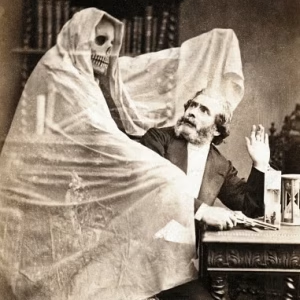
To accompany these changing sights and smells, I am pleased to present some of my personal favorite sounds of Halloween. Rather than devote more attention to established favorites, however, I hope to highlight some spooky masterpieces that have received relatively less appreciation, or, at least, are less popularly associated with Halloween (and less likely to be heard in a Reese’s ad). As a result, we will not be discussing “Thriller,” “Spooky Scary Skeletons,” or “The Monster Mash,” wonderful though they may be. We won’t even be dipping into the treasure trove of morbid rock and metal classics like “(Don’t Fear) The Reaper,” “Riders on the Storm,” “Black Sabbath,” “Raining Blood,” “Zombie Attack,” and so on, though metal has produced arguably more Halloween-themed bands, songs, and album covers than any other genre. Instead, we’ll focus on the stranger side of things, hearing from the likes of Tom Waits, Miles Davis, Frank Zappa, the Sonics, and even Captain Beefheart & His Magic Band (among others).
- “Million Miles”—Bob Dylan, Time Out of Mind, 1997
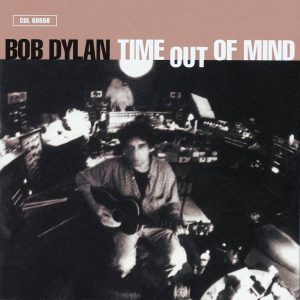
Starting us off is the poet king himself, “His Bobness” (to quote Tom Petty). Dylan’s voyages have brought him into frightful territory on a number of tunes, none more blatant than 2020’s “My Own Version of You.” Here, he spends months “visiting morgues and monasteries / Looking for the necessary body parts / Limbs and livers and brains and hearts” in a quest to create—as other listeners have noted—his own Frankenstein’s monster. “Million Miles” is, admittedly, farther removed from the literal undead, instead detailing a breakup that has left our singer in a state of emotional purgatory. However, some of the images Dylan uses to evoke this waking nightmare strongly suggest the supernatural; for instance, he complains of “voices in the night trying to be heard,” lamenting, “Maybe in the next life I’ll be able to hear myself think.”
What’s more, the track is the closest musical equivalent to a night spent lost in the woods that I’ve ever heard. The making of Time Out of Mind was famously disjointed; as Dylan himself would later say, “that album sounds to me a little off. There’s a sense of some wheels going this way some wheels going that, but hey, we’re just about getting there.” Combine this “off”-ness with producer Daniel Lanois’s penchant for hazy aura, and you’ve perfectly described the vibe of “Million Miles.” Creaking rhythm guitars play slightly out of time with the slow swing of the ride cymbal, a haunted-house organ hopping over the sinking bass all the while. The whole band creeps along like a rickety jalopy, pushing and pulling, one lumbering organism that seems to hold itself together through sheer will. Of particular interest are the snare rolls and cymbal crashes supplied by either jazz legend Brian Blade or rock icon Jim Keltner—both drummers are credited on the track—as well as the sporadic, bluesy cloudbursts of former Fabulous Thunderbirds guitarist Duke Robillard, all of which help keep the track from becoming lifeless (pardon the pun). And thanks to Lanois’s spacious recording, the whole affair sounds as if it’s taking place somewhere in the wilderness, echoing the distance evoked by the title. (For an equally moody but cleaner, more conventional recording, check out Bonnie Raitt’s 2012 cover from the album Slipstream. As always, her slide-guitar playing is top-notch.)
- “Hypnotized”—Fleetwood Mac, Mystery to Me, 1973
As its title suggests, “Hypnotized” is about as mesmerizing as classic rock gets. Written by Fleetwood Mac’s then-lead singer and guitarist Bob Welch, the song was recorded by the band’s final pre-classic lineup—that is, the last lineup sans Stevie Nicks and Lindsey Buckingham. Welch provides lead vocals and guitar (presumably the acoustic rhythm parts), while Christine McVie contributes supporting vocals and Wurlitzer electric piano, John McVie the bass, Mick Fleetwood the drums, and Bob Weston the intermittent electric guitar lead. Lyrically, the song’s three verses sketch a series of mysterious vignettes, unrelated except for their shared uncanniness: “Two friends [have] coffee together / When something flies by  their window”; “a strange, strange pond” in rural North Carolina has perfectly smooth sides, despite showing no traces of human activity; and “there’s a place down in Mexico / Where a man can fly over mountains and hills” without the use of modern technology.
The structure seems simple enough, but it incorporates clever callbacks to give the narrative a cohesive shape. Adopting the role of storyteller, Welch addresses the listener (“you”) repeatedly, essentially spelling out the song’s thesis at the end of its first and last verses: “There’s no explaining / What your imagination can make you see and feel,” he says, later reiterating, “Now you know it’s a meaningless question to ask / If those stories are right / Because what matters most / Is the feeling you get when you’re hypnotized.” This preference for subjective experience over objective fact informs the lyrical style, which gives the listener just enough information to feel unsettled without ever bothering to fully explain anything. (This keeps the listener’s imagination engaged, allowing them to grow even more unsettled as they ponder the unknown). For example, the phrase “Now you know it’s a meaningless question…” is a callback to the verse about the mysterious pond, which begins: “Now it’s not a meaningless question / To ask if they’ve been and gone.” Who are they? Aliens would make sense, since we’re talking about an unexplained crater in a remote area—and “been and gone” suggests a quick visit from above—but we’re never told for sure. On first listen, they is just as suggestive of aliens as it is of spirits, secret government agents, or any other mysterious beings your mind might conjure up to fill the spacious gaps in its knowledge.
Even more striking than the lyrics, however, is the suitably hypnotic music. The song opens with Mick Fleetwood’s driving drumbeat, a moderately fast 6/8 feel with three quick bass-drum triplets in a row. This is harder to keep steady and forceful for about five minutes than it might sound, as I (a middling drummer who’s attempted the song) can attest. The pattern barely changes, and there are no traditional drum fills; once the rest of the band comes in, they too vamp on a repetitive chord loop, creating a cyclical atmosphere that shifts only slightly during the choruses. That said, the song never feels repetitive or remotely boring, thanks to the well-orchestrated parts and improvisations that weave in and out, keeping things sonically varied and lulling the listener into a trance. If McVie’s Wurlitzer is a warm, fuzzy blanket lying over the rhythm tracks, then Weston’s tasteful guitar soloing is a constellation twinkling in the sky above, swept with the dark and windy melodies of the hummed backing vocals.
On a funkier note, the Pointer Sisters released their own version of the song—featuring an all-star lineup of session musicians—on 1978’s Energy. Remaining largely faithful to the original in terms of structure, this revamped version gets much of its funk from Motown veteran Eddie Watkins Jr.’s righteous slap bass, as well as a host of other, subtler alterations. For instance, whereas Mick Fleetwood performs the drumbeat with an assertive, almost rushed rock feel, studio icon and Toto cofounder Jeff Porcaro adopts a slightly slower, relaxed groove—better suited for dancing. Similarly, while frequent collaborators Danny Kortchmar and Waddy Wachtel’s guitar duet essentially fills the same soloing space originally occupied by Weston, the two dig in more aggressively, with Wachtel’s slide guitar in particular changing the vibe from moody jazz to bluesy jam. Overall, the track is more dynamic than the original, starting off reserved and rising in intensity… eventually, we even get energetic drum fills crescendoing in cymbal crashes. But any ambience lost alongside the original’s discipline is made up for by a swirling ecosystem of eerie synths, organ swells, and the strong vocal interplay between the Sisters themselves. The two versions present a case study in different approaches to the same musical notes, and hearing both back-to-back illuminates the stylistic nuances that give rock and funk their respective characters.
- “Murder in The Red Barn”—Tom Waits, Bone Machine, 1992
Really, I could have chosen about a hundred Tom Waits songs, since the morbid and the sinister are his bread and butter. In fact, so much has been written about the mythic bard of primordial America that I won’t spend any time explaining him here. (If you’re unfamiliar with his work, simply absorb a few of the album and song titles I am about to list.) As far as Tom Waits songs go, “Murder in The Red Barn” is actually pretty tame. It’s not chillingly brutal, like many of the other songs on Bone Machine (think “The Earth Died Screaming,” with its bone-like marimba, or “In The Colosseum,” which features what sounds like slamming doors and ringing hammers); unsettlingly supernatural, like the Western-tinged “Black Wings”; downright abrasive, like the heavy “Filipino Box Spring Hog” (from Mule Variations); theatrically immersive, like “9th &  Hennepin” (from Rain Dogs) or any of his other sound effect-filled, spoken-word narratives; or directly relatable to Halloween, like “Cemetery Polka” or “Black Rider,” in which the titular Black Rider invites you to “Take off your skin / And dance around in your bones” so he can “drink your blood like wine.”
Still, what the menacingly folky “Murder in The Red Barn” has that these others don’t is a perfectly seasonal quality, evident in both the music and the lyrics. Listening to recording engineer Joe Marquez’s twanging banjo alongside Waits’ own steadily stumbling drums, one can’t help but imagine themself shuffling through fallen leaves around a run-down farm. (The abundant reverb on the percussion was achieved by recording in a basement utility room, rather than the regular recording studio.) The literary richness of Waits’ lyrics is such that I cannot comment on every image (“the ravens nest in the rotted roof”), instance of personification (“The woods will never tell / What sleeps beneath the trees”), idiosyncratic character (“Reba the Loon”), or paradoxical pearl of snide wisdom (“Now thou shalt not covet thy neighbor’s house / Or covet thy neighbor’s wife / But for some, murder is the only door / Through which they enter life”). I cannot even claim to know what the song is really about; I can, however, mention a few standout moments.
First, after announcing the murder in his gravelly drawl and seeming to muse on who might have committed it, Waits observes, “Someone’s crying in the woods, someone’s burying all his clothes / Now Slam the Crank from Wheezer slept outside last night and froze.” Unconcerned with explaining who Slam the Crank from Wheezer might be, Waits moves on to introduce what will become an ominous refrain: “Roadkill has its seasons just like anything / There’s possums in the autumn and there’s farm cats in the spring.” Eventually, we learn how “they surrounded the house / They smoked him out, took him off in chains / The sky turned black and bruised / And we had months of heavy rains.” Coming after an allusion to the Ten Commandments, these weather conditions give the impression of some sort of Biblical punishment. Still, it remains unclear who exactly dragged him out of his house, or whether the he who was dragged out of his house is the same he whose clothes are being buried. This would presumably be the murder victim, unless the new he is a totally different person, in which case he might be the murderer, and they might be the police. We do know, however, that “no one’s asking Cal / About that scar upon his face / ‘Cause there’s nothin’ strange / About an axe with bloodstains in the barn / There’s always some killin’ / You got to do around the farm.”
Despite its confusing plot—or, perhaps more accurately, because of its confusing plot—the song succeeds on the strength of its atmosphere. Regarding the lyrics “Is that blood on the tree? / Or is it autumn’s red blaze?” one Genius annotator asserts, “[These] line[s] suggest that the locals think of murder as somewhat natural, almost seasonal.” Thinking in the opposite direction, I would also argue that this blending of violent and natural imagery lends a threatening aura to the autumnal environment itself; combined with Waits’ deadpan sarcasm, this intensifies the season’s traditional symbolic association with death to an exaggerated, almost absurd level. “Murder in The Red Barn” may not mention Halloween, but I’m hard pressed to think of a better distillation of the holiday’s character than “morbid absurdity.”
- “Rated X”—Miles Davis, Get Up With It, 1974
Released during an almost nine year stretch between proper studio albums, Get Up With It is one of a few anthologies of previously unreleased material that showcases Miles at his most experimental. “Rated X,” recorded in 1972, is undoubtedly the album’s most intense cut, comprising nearly seven minutes of ceaseless groove drumming (courtesy of jazz and funk master Al Foster), syncopated bass riffing (provided by twenty-one year-old Michael Henderson, whom Miles had famously poached from Stevie Wonder’s band), aggressive wah-wah guitar (supplied by eventual Madonna producer Reggie Lucas), and intricate hand drums (played by “tabla maestro” Badal Roy and musical renaissance man James Mtume).  Apparently, electric piano and electric sitar sit somewhere in the incredibly dense mix, but you wouldn’t know it from listening. The song is simply a “wall of sound” that starts off tense and then gets tenser, never indulging its audience with harmonic changes, traditionally arranged melodies, or a B-section.
Miles, of course, needs no introduction, but for those only familiar with his singular voice on the trumpet, his presence on “Rated X” might not be readily apparent. That’s because, on this track, Miles trades in his horn for the loudest, shrillest, stereotypically “cheesiest” electric organ imaginable, with which he produces some of the most uncompromisingly dissonant, violent chords ever played. Periodically, all instruments except the incessant organ suddenly and simultaneously disappear from the mix, only to return in unison a few seconds later; as one Pitchfork reviewer noted, this unpredictable stop-start arrangement simulates the sensation of watching a “horror movie… [with] flickering cuts” and jump scares. (The Pitchfork piece provides enlightening background on Miles’ organ explorations, as well as their less-than-enthusiastic reception by Miles’ friend and foundational funk figure Sly Stone). Having heard the song through headphones, I can confirm the organ alone is evocative of a horror movie. Add in the other elements, and you get an impressive achievement in unresolved angst—music that manages to gnaw at itself for almost seven minutes without ever undoing the knot it’s been tied into.
Whether or not such an experience is everyone’s cup of tea, “Rated X” holds a meaningful place on Get Up With It and within Miles’ career. Like the avant-garde jazz fusion scene from which it emerged, “Rated X” is a marriage of diverse influences and sensibilities: funk rhythms, Indian classical instruments, heavy psychedelic guitar, and space-age sound effects. The rest of the album is no less diverse, running the stylistic gamut from the many-sectioned barn burner “Mtume” and the thirty-two-minute Caribbean epic “Calypso Frelimo” to the mellow “Maiysha” (showcasing a very different side of Miles’ organ playing) and the somber “He Loved Him Madly” (an elegy for Duke Ellington). Even the pop world makes appearances; the accessibly arranged “Red China Blues” features notable session musicians alongside Lester Chambers’ soulful harmonica, while the album’s final song is named for R&B legend and Beatles collaborator Billy Preston.
All this is evidence of two things: Miles always rejected musical labels and genre constraints, and everything about his art was intentional. “White people are funny… in America, they thought I just woke up one morning and had the blues and started playing the trumpet,” he remarked. “But it don’t go like that, and you can’t explain that to them. And so now they understand…. Now they know I’m not an accident. Neither is Herbie Hancock, or Wayne Shorter… Joe Zawinul, people I work with.”
- Speed Run
This is the point where I realize the article is getting way too long, and I’m never going to get it done if I keep writing this much about each song. For this reason, I will now attempt (and likely fail) to switch to faster-paced Robert Christgau-style reviews.
- “Zomby Woof”—Frank Zappa and the Mothers, Over-Nite Sensation, 1973
 I almost chose 1970’s “Transylvania Boogie”—essentially a lengthy guitar solo over a tight funk rhythm section with shuffle breaks—but found “Zomby Woof” more compelling. A stellar introduction to the Zap-Man brand of fusion, it features: about one million sections; time signatures shifting with disorienting speed; blazingly fast unison runs; carnivalesque quintuplet horn lines; heavy metal guitars; supremely funky clavinet contributions from George Duke (both the crunchy and wah-wah varieties); a lengthy Zappa guitar solo that deftly develops motifs from earlier in the song; and a choir of syncopated background vocals supporting Zappa’s sly delivery of entirely obscene lyrics. Regarding those lyrics… steer clear. Largely a leftist who railed against what he saw as America’s descent into “fascist theocracy”—check out his 1980s appearance on CNN’s Crossfire—Zappa was an intelligent anti-authoritarian with a great sense of humor and a knack for the absurd; that said, he fumbled this one hard. In a world full of sexual violence and patriarchy (two separate but generally intertwined issues), a tongue-in-cheek tale about an undead werewolf serial rapist just comes off as unthinking “shock humor” at best, chauvinistic “punching down” at worst.
- “Strychnine”—The Sonics, Here Are the Sonics, 1965
 The wonderfully proto-punk Sonics are a garage-rock band who’ve been admired for their distortion (part of which can be credited to the crudeness of the audio recordings themselves) by everyone from Kurt Cobain to The White Stripes. The more obvious song choice from them would’ve been the 1964 debut single “The Witch,” which rocks a stereotypically creepy chromatic riff, wonky tempo shifts, and an unhinged vibrato-fest of a guitar solo. However, I wanted to give the rhythmically tighter “Strychnine” some recognition, not least for the full-on ‘50s rock ‘n’ roll treatment it receives—we’re talking classic Little Richard piano, Chuck Berry guitar shredding, pounding drums, and a saxophone section, plus a sufficiently spooky minor-key intro on the Wurlitzer. Most importantly, lead vocalist Gerry Roslie enthusiastically advises the listener to drink strychnine, a toxic pesticide guaranteed to produce a violent, spastic death. “If you listen to what I say / You’ll try strychnine some day,” he sings, promising it will “Make you jump, it’ll make you shout / It’ll even knock you out”—probably permanently— and that it’s “good / For what’s ailin’ you”—assuming, of course, that “what’s ailin’ you” is being alive. My initial response to the song was to wonder at the kind of response it might receive were it released today, but on second thought, I’m more curious as to how it got greenlit for a commercial release in 1965. My favorite part has to be the fadeout, where Roslie’s final declaration of love for “the taste / Of straight strychnine” comes before a series of noticeably out-of-tune yelps.
- “Electricity”—Captain Beefheart and His Magic Band, Safe as Milk, 1967
 It’s important to note that, in addition to the Captain’s experimental polytonal mind-blowers like Trout Mask Replica, much of his music and mystique—like that of his spiritual successor Tom Waits—are direct continuations of Black American musical traditions. Sometimes, those continuations are more like recreations, and once in a while, those recreations are practically note-for-note; on “Electricity,” Beefheart’s signature growl essentially becomes an impression of legendary blues architect Howlin’ Wolf. While the Captain’s specific musical personality makes such realities particularly hard to miss, he resides within the same broader context as all American musicians: that of cultural appropriation and socioeconomic inequality.
Having said that, the multidisciplinary genius was never himself the type for exorbitant fame or fortune. Partly due to his—ahem—eccentric style of leadership, his band even flirted with literal starvation during the violence-filled production of Replicain 1968-69. (For a fuller account of the group’s lifestyle and Beefheart’s probable struggles with mental health, check out this Wikipedia page.) As for “Electricity,” before the band finally landed a deal with Buddah Records to release their Safe as Milk debut, “[‘Electricity’] apparently got Beefheart dropped from A&M.. During the recording he actually broke a microphone with the power of his voice…” according to Genius. The power of the groove on this thing is just as badass. Drums and bass are inventive and locked in, guitars bring the hard funk and swampy blues, and sci-fi theremin fits the “electric” theme to a T. Speaking of which: “Lighthouse beacon straight ahead / Straight ahead across black seas to free-seeking electricity / High voltage man kisses night / To bring the light to those who need to hide / Their shadow deed.” Seedy characters and utility workers meet psychedelic impressionism, drunk on internal rhyme.
- “Spooky”—Lamonta, Scant at Best, 2020
 Ah yes, the best for last… There’s nothing quite like a pop-punk cover of “The Night That the Skeletons Came to Life.” Originally, this glorious lyrical train wreck was improvised by Tim Robinson’s bassist character in an episode of I Think You Should Leave; he mistakes the lead singer’s new country song (“The Day Robert Palins Murdered Me”) for an inclusive free-for-all, and his non sequitur ad-libs subsequently derail their recording session. In the hands of Sacramento’s Lamonta, the bassist’s song becomes a high-energy sing-along à la Blink-182, major-scale melodies soaring above a bed of blast beats and power chords. As tends to happen in Robinson’s work, the sincerity with which he presents his subjects and their aspirations almost overpowers the ridiculousness of the scenario. For the skeletons, “all they want is another chance at life / They’ve never seen so much food as this / Underground there’s half as much food as this.” Accordingly, “They pull your hair up but not out / To turn into a man and have another chance at life / … / But if they pull it out they turn to bones.” (That skeletons are somehow afraid of “turn[ing] to bones” is just one of the bassist’s lyrical gaffes.)
Lying in the comedic gray area between irony and earnestness, the song arguably finds its fullest expression in Lamonta’s cover. Here, the skeleton verses are no longer in competition with the lead singer’s attempts to regain control of “The Day Robert Palins Murdered Me”; Lamonta includes only the words of Tim Robinson’s character, producing a cohesive, professional-sounding rendition that commits to the bit completely. In some sense, this heightens the absurdity, exchanging the skit’s original source of comedic tension for a new one. The ill-thought-out lyrics—originally performed with the halting uncertainty of a man who bit off more than he could chew because he “honestly thought we were just making that up”—are now belted out with genuine passion. Unsure whether to find the content funny or the delivery inspiring, your brain can only resolve the dissonance by exploding.
Sources
https://www.bobdylan.com/songs/moonlight/
https://www.womansday.com/life/g62333884/vintage-halloween-photos/
https://www.bobdylan.com/songs/million-miles/
https://www.bobdylan.com/songs/my-own-version-of-you/
https://pitchfork.com/reviews/albums/bob-dylan-rough-and-rowdy-ways/
https://en.wikipedia.org/wiki/My_Own_Version_of_You
https://en.wikipedia.org/wiki/Time_Out_of_Mind_(Bob_Dylan_album)#Personnel
https://en.wikipedia.org/wiki/Duke_Robillard
https://en.wikipedia.org/wiki/Hypnotized_(Fleetwood_Mac_song)
https://genius.com/Fleetwood-mac-hypnotized-lyrics
https://en.wikipedia.org/wiki/Energy_(Pointer_Sisters_album)#Personnel
http://www.tomwaits.com/songs/song/35/The_Black_Rider/
https://en.wikipedia.org/wiki/Bone_Machine
https://en.wikipedia.org/wiki/Get_Up_with_It#cite_note-CG-10
https://pitchfork.com/reviews/albums/miles-davis-get-up-with-it/
https://www.robertchristgau.com/get_chap.php?k=D&bk=70
https://en.wikipedia.org/wiki/Over-Nite_Sensation
https://en.wikipedia.org/wiki/The_Sonics#Discography
https://en.wikipedia.org/wiki/Here_Are_the_Sonics
https://genius.com/The-sonics-strychnine-lyrics
https://en.wikipedia.org/wiki/Strychnine#Human_toxicity
https://en.wikipedia.org/wiki/Safe_as_Milk
https://en.wikipedia.org/wiki/Trout_Mask_Replica
https://genius.com/Captain-beefheart-and-his-magic-band-electricity-lyrics
https://www.lyrics.com/lyric-lf/4523909/Lamonta#google_vignette

Continue reading

